And at that other end of time, mankind was waiting. People with all their cruelty arogance and brilliance: warlords, murderers, dictators ...

Saturday, 28 September 2024
in the beginning
And in the beginning was the word.. The word began as a whisper, a whisper in the airless, spaceless and timeless void. The word became thunder, preceeding a lightning flash and all that was to be created in the world.

Saturday, 17 June 2023
Infuriating pigeons
In its simplest form, the pigeon repeats a three syllable phrase which could be “I love you. I love you…”
When the pigeon extends its call to five syllables it should be “I really love you. I really love you …”
But listen carefully, the infuriating bird clearly thinks of the phrase differently it finishes on the “I“ so it’s more like “Really love you - I. Really love you - I …”
Nature is wonderful.
Friday, 20 May 2022
Lists
Lists
Here’s two wonderful examples of apparently random lists - the first is from ‘The Aleph’ by Jorge Luis Borges:
On the back part of the step, toward the right, I saw a small iridescent sphere of almost unbearable brilliance. At first I thought it was revolving; then I realised that this movement was an illusion created by the dizzying world it bounded. The Aleph's diameter was probably little more than an inch, but all space was there, actual and undiminished. Each thing (a mirror's face, let us say) was infinite things, since I distinctly saw it from every angle of the universe. I saw the teeming sea; I saw daybreak and nightfall; I saw the multitudes of America; I saw a silvery cobweb in the center of a black pyramid; I saw a splintered labyrinth (it was London); I saw, close up, unending eyes watching themselves in me as in a mirror; I saw all the mirrors on earth and none of them reflected me; I saw in a backyard of Soler Street the same tiles that thirty years before I'd seen in the entrance of a house in Fray Bentos; I saw bunches of grapes, snow, tobacco, lodes of metal, steam; I saw convex equatorial deserts and each one of their grains of sand; I saw a woman in Inverness whom I shall never forget; I saw her tangled hair, her tall figure, I saw the cancer in her breast; I saw a ring of baked mud in a sidewalk, where before there had been a tree; I saw a summer house in Adrogué and a copy of the first English translation of Pliny -- Philemon Holland's -- and all at the same time saw each letter on each page (as a boy, I used to marvel that the letters in a closed book did not get scrambled and lost overnight); I saw a sunset in Querétaro that seemed to reflect the colour of a rose in Bengal; I saw my empty bedroom; I saw in a closet in Alkmaar a terrestrial globe between two mirrors that multiplied it endlessly; I saw horses with flowing manes on a shore of the Caspian Sea at dawn; I saw the delicate bone structure of a hand; I saw the survivors of a battle sending out picture postcards; I saw in a showcase in Mirzapur a pack of Spanish playing cards; I saw the slanting shadows of ferns on a greenhouse floor; I saw tigers, pistons, bison, tides, and armies; I saw all the ants on the planet; I saw a Persian astrolabe; I saw in the drawer of a writing table (and the handwriting made me tremble) unbelievable, obscene, detailed letters, which Beatriz had written to Carlos Argentino; I saw a monument I worshipped in the Chacarita cemetery; I saw the rotted dust and bones that had once deliciously been Beatriz Viterbo; I saw the circulation of my own dark blood; I saw the coupling of love and the modification of death; I saw the Aleph from every point and angle, and in the Aleph I saw the earth and in the earth the Aleph and in the Aleph the earth; I saw my own face and my own bowels; I saw your face; and I felt dizzy and wept, for my eyes had seen that secret and conjectured object whose name is common to all men but which no man has looked upon -- the unimaginable universe.
And the second is from Bob Dylan’s ‘A hard rain’s gonna fall’:
Oh, what did you see, my blue-eyed son?
Oh, what did you see, my darling young one?
I saw a newborn baby with wild wolves all around it
I saw a highway of diamonds with nobody on it
I saw a black branch with blood that kept drippin’
I saw a room full of men with their hammers a-bleedin’
I saw a white ladder all covered with water
I saw ten thousand talkers whose tongues were all biroken
I saw guns and sharp swords in the hands of young children.
Thursday, 19 May 2022
Orientation
When I was in hospital recently I spent a few days lying on my side. When I finally opened my eyes everything had rotated though 90 degrees. People were walking on the wall. Panicking, I moved my head to an upright position and the scene slid through 90 degrees back to ‘normal’. This happened more than once.
It reminded me of a psychology experiment I saw on TV. The experimentee was fitted with some glasses which inverted everything in his field of vision. He found movement very difficult for a few days but then he adjusted to the device and was able to go about the world as normal. His vision did not seem to him to be upside down. Of coarse the image on our retina is inverted anyway so we all compensate for this all the time.
When the glasses were removed, he saw the world upside down once more, until his brain made the adjustment and his vision returned to ‘normal’.
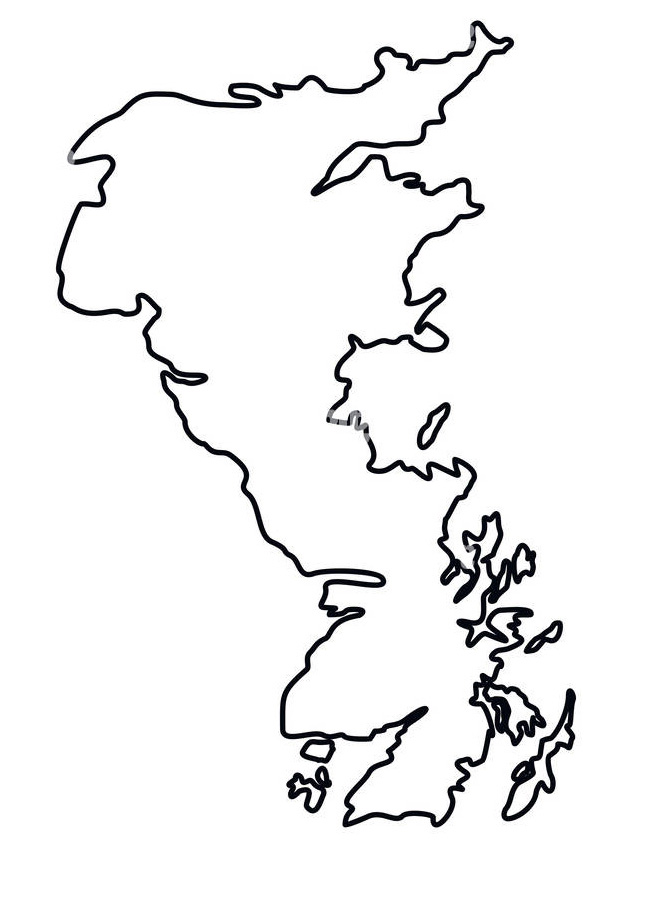
It is disturbing to see a map like this even though we know it is an arbitrary convention which puts North at the top.
Now here’s a question: a mirror inverts things laterally (from left to right). Why doesn’t it do the same vertically (from top to bottom)?
Thursday, 28 May 2020
Zeno’s paradox
Zeno’s paradox is based on the idea that time and space are divisible. Here is the paradox in its simplest form:
A moving thing to get from A to B must first traverse half the distance. And to get halfway it must traverse a quarter of the distance - and so on. Since the thing has to traverse an infinite number of (progressively smaller) distances this would take an infinite amount of time. Therefore it cannot move at all - so motion is impossible. Mathematically the resolution of this paradox depends on the fact that when you add the series 1/2+1/4+1/16 …. and so on, you don’t get infinity - you get one. But the paradox reveals a deeper problem about the nature of time and space.
Is space granular?
in other words are there are tiny compartments or ‘quanta’ of space?
If it is then there would be a finite number of compartments between A and B so the paradox is resolved. But how does a thing move from one compartment to the next?
Is time granular?
Think of the analogy of a film or video - each frame of which is a still image which if projected quickly enough gives the illusion of smooth motion. But is this ‘smooth motion’ really what is happening?
If time is made of a succession of instants or ’nows’ then either each ’now’ has no duration and time is smooth or each now has a finite duration and it is lumpy. If time is lumpy then how does it get from one lump to the next?
This is the same problem that Physics faces in trying to resolve a tension between ‘lumpy’ quantum theory (which applies to tiny phenomena) and ‘smooth’ relativity and wave theory (which applies to big phenomena). Or between ‘digital’ vs ‘analog’.
Perhaps we should remember that time and space are simply human concepts with which we try to explain the World. The World just IS.
Thursday, 9 April 2020
Creativity?
How is anything new ever made?
Perhaps this question can be boiled down to a simpler one: How do we make a choice when there are few constraints? or How do we choose between alternatives? or even How do we make random choices?
Ask a computer to choose a random digit and it may be programed to generate an apparently random number by using complex algorithms involving huge prime numbers.
We imagine we can choose between 2 alternatives easily. Apolonius’s ass is said to have starved to death because it could not decide between 2 equally attractive piles of hay. How do we decide? ‘We just pick one’ you say but what does this process of just piking involve?
We imagine we can choose between 2 alternatives easily. Apolonius’s ass is said to have starved to death because it could not decide between 2 equally attractive piles of hay. How do we decide? ‘We just pick one’ you say but what does this process of just piking involve?
Evolution is meant to proceed by selecting the most well-adapted random mutation. But what does the process of randomness actually entail?
The second law of thermodynamics depends on random interactions more likely to produce chaotic than ordered structures. But what governs these random interactions? How do they take place?
Tuesday, 31 January 2017
Pity Poor Bradford
Tumbleweed
Once they have enjoyed the splendour and energy of City Park and admired the ornate elegance of City hall, a visitor wandering though the City’s streets will be met with one clear impression: urban decay. Beautiful facades with ornate embellishments are now derelict or disfigured by a series of cheap additions which tell a tale of failed enterprises. Empty and neglected buildings reinforce the story that we are heading on a downward slope to disaster. Buildings constructed since the 1960s are amongst the most depressing examples of brutalism to be seen anywhere in Britain. Parts of our City are deserted at times when other towns are bustling with activity. The visitor retires to a more pleasant environment with all their prejudices confirmed.
But what of the good people of Bradford?
The symptoms of depression include:
- Low self-confidence and self-esteem
- A sense of unreality
- A feeling of no pleasure in life - turning to alcohol and other drugs for solace.
Planning
The City’s many planning mistakes have been based on two fundamental myths:
- That “A New Era of Prosperity’ is just around the corner.
- That hope lies in imitating successful (and sometimes unsuccessful) schemes often promoted by sharks from other towns.
Lack of vision, creativity and confidence have plagued some disastrous, and sometimes even corrupt, decision-making in the past. For too long we have laboured under the heavy grey cloud of low expectation:
“Well, it’s Bradford isn’t it?” (shrug).
Wake up Bradford!
The citizens of Bradford deserve much better than this. We need to rediscover pride in our City and ourselves. The City centre should be at the very heart of our inspiration and hope.
Let’s paint Highpoint pink!
Highpoint is the derelict, ex-YBS, bunker-like building at the foot of Westgate. Painting it bright pink could be the very beginning of a new urban aesthetic. And why stop there? Over time, Bradford could become a colourful city of wonder and excitement, lifting the spirits of its citizens and its visitors.

Wednesday, 30 March 2016
Tuesday, 29 March 2016
Let's hear it for the dead
Let's hear it for the dead.
What was it that you said?
I said 'Let's hear it for the dead'.
My granny, that friend of mine,What was it that you said?
I said 'Let's hear it for the dead'.
My mother and my dad.
Gurdjieff, Neitzche, Wittgenstein,
Let's not forget the bad:
Hitler, Stalin, Ghengis Khan
Let's hear it for the dead.
Wednesday, 27 May 2015
Fine tuning
In the sixteenth century, the biggest cosmic entity known about was the solar system. The astronomer, astrologer and mathematician Kepler was convinced that the orbits of the planets must be fine-tuned by God according to some harmonious law.
Now we know there is no such harmonious law and the orbits of planets are the result of chaotic and unpredictable events, but we are searching for harmony at some deeper level.
The world we live in is perfectly fine-tuned for our existence in two ways:
Now we know there is no such harmonious law and the orbits of planets are the result of chaotic and unpredictable events, but we are searching for harmony at some deeper level.
The world we live in is perfectly fine-tuned for our existence in two ways:
- We live on a 'Goldilocks' planet, just the right size and distance from the sun to be favourable to life.
- We live in a universe with just the right physical constants (gravity, speed of light and so on) for the creation of stable atoms, molecules, stars and forces which conspire to allow us and everything else to exist.
Why?
- Obviously the Goldilocks question is easily answered: There are billions of possible life-supporting planets so even if life is a very unlikely event, the conditions for life must be right on many of them.
- The answer to question 2 is a bit harder - here's 3 possibilities:
a) There is a fundamental reason for the physical constants to have the values they have, but we haven't found out what it is.
b) There is no fundamental reason, but there is a very big number of universes so the constants are just right in some of them.
Or the incredible nature of our existence might suggest there is an INFINITE number of universes - so every kind of crazy world must exist! I have a gut-feeling that this is nonsense and for a real world to exist there cannot be an infinite number of anything - and for that matter there can't be zero (nothing) either.
c) WE ARE HERE so we must accept our existence prima-facie. All other other facts derive from this observation. This shifts the focus to us rather than the moment of creation.
We create the universe in our minds. Reality just is because it is.
There is no time, no space, no universe, no creation - these are all concepts of our collective minds.
Three Black Boxes
Suppose there are three sealed black boxes with locks which are impossible to open. We are not allowed to investigate them (poke them, weigh them or interrogate them in any way).
We are told that no one can EVER open Box 1 now or at any time in the future. There is no history of it. No one knows or will ever know what it contains.
Someone has placed something in Box 2 and died, telling no one and leaving no record of its contents.
Box 3 has a time-lock mechanism so that at some time in the future it will spring open and reveal its contents.
So in Box 1 we cannot know its contents, nobody has ever known its contents and nobody will ever know its contents.
In Box 2 someone once knew its contents but we don't know its contents now and nobody in the future will ever know its contents.
In Box 3 someone once knew its contents, we don't know its contents now, but somebody in the future will know its contents.
Q. Is it reasonable to ask the question "What is in the box?"?
A. 1 No; 2 Maybe; 3 Yes.
We are told that no one can EVER open Box 1 now or at any time in the future. There is no history of it. No one knows or will ever know what it contains.
Someone has placed something in Box 2 and died, telling no one and leaving no record of its contents.
Box 3 has a time-lock mechanism so that at some time in the future it will spring open and reveal its contents.
So in Box 1 we cannot know its contents, nobody has ever known its contents and nobody will ever know its contents.
In Box 2 someone once knew its contents but we don't know its contents now and nobody in the future will ever know its contents.
In Box 3 someone once knew its contents, we don't know its contents now, but somebody in the future will know its contents.
Q. Is it reasonable to ask the question "What is in the box?"?
A. 1 No; 2 Maybe; 3 Yes.
Concepts, theories and stories
According to the scientific viewpoint: if there is no evidence for something (e.g. God) then is not reasonable to believe in it's existence.
But we believe in the 'existence' of concepts such as energy, mater, infinity, time, space, jealousy, love, empathy, and humanity because:
But these concepts don't 'exist' in the real world, they only exist in the world inside our heads. This theoretical world can accommodate many concepts and stories - some of them can make predictions which can be verified, and some cannot.
Even some recent theories about the universe may not be verifiable in the real world - String Theory and Parallel Worlds for example. If it can be shown that a 'theory' is not verifiable then does it count as a theory? Maybe it's more of a story.
The world is made of stories.
But we believe in the 'existence' of concepts such as energy, mater, infinity, time, space, jealousy, love, empathy, and humanity because:
- they are useful to us and
- we can make predictions using these concepts which can be verified in the real world out there.
But these concepts don't 'exist' in the real world, they only exist in the world inside our heads. This theoretical world can accommodate many concepts and stories - some of them can make predictions which can be verified, and some cannot.
Even some recent theories about the universe may not be verifiable in the real world - String Theory and Parallel Worlds for example. If it can be shown that a 'theory' is not verifiable then does it count as a theory? Maybe it's more of a story.
The world is made of stories.
Saturday, 24 January 2015
Are you digital?

Mike Wazowski is digital, he is made of nano-blocks. The
more blocks we use, the closer he gets to the ‘real’ smooth Mike Wazowski.
We used to record music using a big horn (ehem!) which
focused the vibrations of the smooth sound waves onto a needle which cut a
groove of varying depth in a wax disk. This was ‘analog’ recording where the
shape of the grooves is analogous to the shape of the sound-waves of the music.
Because of the mechanics of the process, the recordings were never truly faithful
to the original.
A digital recording can get very close to the smooth sound-wave
patterns by using lots of bits (building blocks) of information. The more bits
it uses, the closer it gets to the analog original and so the more faithful is
the recording. We have now got to the point where we can use enough bits to
make the recording indistinguishable from the original to the human ear.
Digital technology has rapidly become our favoured method of
representing the real world, so whilst the real world is an analog world, we
have started to think of the world we have designed – which is the world we
increasingly inhabit - as a digital world.
The analog world is evolved, female, and yin; whist the digital
world is designed male, and yang.
Friday, 23 January 2015
Nature or Nurture?

‘Nature’ is the result of the process of evolution. We were
not designed for a purpose, we evolved to be human by genetic imperatives
constrained and adapted by our changing environment. The whole of nature is
mysterious to us – it has no purpose – we try to understand it through
observation and metaphor. Currently, our favourite metaphor is the computer.
A computer is designed for a purpose, it is not the result
of an evolutionary process. So it’s behaviour should be predictable.
A computer program uses the assets of the computer to
intentionally produce specific results. Because we understand the computer, we
can program it to produce the results we want.
‘Nurture’ is a process by which we create an environment
using (intentional or unintentional) rewards and constraints to enable certain
results. We don’t understand how the human works so we can never produce
predicable results by nurturing.
The chap in the picture doesn’t know how he got to be like that.
Clearly his eccentric clothes are the result of cultural influences. His white
gloves and deferential expression suggest he might be some kind of servant. In
his ‘natural’ naked state he might have been an insect.
But of course he could never have evolved – he was designed
for a purpose – as a character in a (Disney?) film and a happy-meal toy to
promote the sale of junk food.
Friday, 28 November 2014
Help!

‘Now, before you press that button, let’s sit down with a cup of tea and talk this over. What’s your name? What does your mother think about this? What if there is no heaven? Would you like a biscuit? Why do you want to kill? Who is your favourite super-hero? Do you want to have children? How can this do any good? Fancy a game of cards?’
An Israeli study of the psychological profiles of suicide bombers concludes:
“They usually were very timid people, introverted, their problem was always communication…They are not violent at all."
Quotes from a suicide bomber in the moments leading up to pressing the button (which failed to operate).
"I never felt so calm in my life,"
"It was the will of God.”
“I was very happy…waiting for the time to come."
Thursday, 23 October 2014
Be Patient

Is the tiger giving sage advice “Be patient like me, I have
to prowl around for days before an opportunity for a kill comes along. Even
when I give chase, my quarry often escapes and I have to start prowling all
over again.” Or has he got a sinister
message for us “Just you wait there, be patient and I’ll get you in
while you're prevaricating.”
God was watching a movie of The Creation. The opening
sequence of the Big Bang was terrific. The dispersal of matter and the
formation of galaxies and stars was really cool. But then nothing much happened
for thirteen billion years.
God got bored and switched off.
Friday, 17 October 2014
I wish I was real

We often have the feeling that things are ‘not real’, that
we are in a film for example. Only occasionally are we conscious of being
conscious. Can we be conscious of being conscious of being conscious? How far
does this hall of mirrors have to recede before we know we are real? Language
has an important part to play in this bizarre process and mindfulness is a way
of being aware of it.
On the other hand, perhaps we are more real when we forget
this nonsense and experience reality directly, not filtered by language. This
might happen dramatically in a trauma or a moment of ecstasy but it is not sustainable for long (we would not be able to function as human beings if it was).
We all live in a fantasy world. It is not possible to plug
ourselves into the real world directly without the filters of our senses, our minds,
our language, our prejudices, our education or our religious and cultural
backgrounds.
As it becomes more possible to have experiences through the
virtual world (which by definition is not real) the boundaries between virtual
and real have become blurred.
Perhaps none of us is real.
Subscribe to:
Posts (Atom)