Showing posts with label Hatching ideas. Show all posts

Thursday, 28 May 2020

Zeno’s paradox

Zeno’s paradox is based on the idea that time and space are divisible. Here is the paradox in its simplest form:

A moving thing to get from A to B must first traverse half the distance. And to get halfway it must traverse a quarter of the distance - and so on. Since the thing has to traverse an infinite number of (progressively smaller) distances this would take an infinite amount of time. Therefore it cannot move at all - so motion is impossible. Mathematically the resolution of this paradox depends on the fact that when you add the series 1/2+1/4+1/16 …. and so on, you don’t get infinity - you get one. But the paradox reveals a deeper problem about the nature of time and space.

Is space granular?

in other words are there are tiny compartments or ‘quanta’ of space? 
If it is then there would be a finite number of compartments between A and B so the paradox is resolved. But how does a thing move from one compartment to the next?

Is time granular?

Think of the analogy of a film or video - each frame of which is a still image which if projected quickly enough gives the illusion of smooth motion. But is this ‘smooth motion’ really what is happening?
If time is made of a succession of instants or ’nows’ then either each ’now’ has no duration and time is smooth or each now has a finite duration and it is lumpy. If time is lumpy then how does it get from one lump to the next? 

This is the same problem that Physics faces in trying to resolve a tension between ‘lumpy’ quantum theory (which applies to tiny phenomena) and ‘smooth’ relativity and wave theory (which applies to big phenomena). Or between ‘digital’ vs ‘analog’.

Perhaps we should remember that time and space are simply human concepts with which we try to explain the World. The World just IS.

Wednesday, 27 May 2015

Fine tuning

In the sixteenth century, the biggest cosmic entity known about was the solar system. The astronomer, astrologer and mathematician Kepler was convinced that the orbits of the planets must be fine-tuned by God according to some harmonious law.
Now we know there is no such harmonious law and  the orbits of planets are the result of chaotic and unpredictable events, but we are searching for harmony at some deeper level.
The world we live in is perfectly fine-tuned for our existence in two ways:
  1. We live on a 'Goldilocks' planet, just the right size and distance from the sun to be favourable to life.
  2. We live in a universe with just the right physical constants (gravity, speed of light and so on) for the creation of stable atoms, molecules, stars and forces which conspire to allow us and everything else to exist.
Why?
  1. Obviously the Goldilocks question is easily answered: There are billions of possible life-supporting planets so even if life is a very unlikely event, the conditions for life must be right  on many of them.
  2. The answer to question 2 is a bit harder - here's 3 possibilities:
a) There is a fundamental reason for the physical constants to have the values they have, but we haven't found out what it is.
b) There is no fundamental reason, but there is a very big number of universes so the constants are just right in some of them. 
Or the incredible nature of our existence might suggest there is an INFINITE number of universes - so every kind of crazy world must exist! I have a gut-feeling that this is nonsense and for a real world to exist there cannot be an infinite number of anything - and for that matter there can't be zero (nothing) either.
c) WE ARE HERE so we must accept our existence prima-facie. All other other facts derive from this observation. This shifts the focus to us rather than the moment of creation. 
We create the universe in our minds. Reality just is because it is. 
There is no time, no space, no universe, no creation - these are all concepts of our collective minds.

Three Black Boxes

Suppose there are three sealed black boxes with locks which are impossible to open. We are not allowed to investigate them  (poke them, weigh them or interrogate them in any way).
We are told that no one can EVER open Box 1 now or at any time in the future. There is no history of it. No one knows or will ever know what it contains.
Someone has placed something in Box 2 and died, telling no one and leaving no record of its contents.
Box 3 has a time-lock mechanism so that at some time in the future it will spring open and reveal its contents.

So in Box 1 we cannot know its contents, nobody has ever known its contents and nobody will ever know its contents.
In Box 2 someone once knew its contents but we don't know its contents now and nobody in the future will ever know its contents.
In Box 3 someone once knew its contents, we don't know its contents now, but somebody in the future will know its contents.

Q. Is it reasonable to ask the question "What is in the box?"?
A. 1 No; 2 Maybe; 3 Yes.

Concepts, theories and stories

According to the scientific viewpoint: if there is no evidence for something (e.g. God) then is not reasonable to believe in it's existence.
But we believe in the 'existence' of concepts such as energy, mater, infinity, time, space, jealousy, love, empathy, and humanity because:

  1. they are useful to us and 
  2. we can make predictions using these concepts which can be verified in the real world out there. 

But these concepts don't 'exist' in the real world, they only exist in the world inside our heads. This theoretical world can accommodate many concepts and stories - some of them can make predictions which can be verified, and some cannot.
Even some recent theories about the universe may not be verifiable in the real world - String Theory and Parallel Worlds for example. If it can be shown that a 'theory' is not verifiable then does it count as a theory? Maybe it's more of a story.
The world is made of stories.

Monday, 5 May 2014

Here be dragons

Let’s begin with Borges’ metaphor of the cartographers who made more  and  more accurate maps of the world until their map became as big as the world it was mapping, and finally, identical with it.
We perceive the world by making a map or model of it. At each glance we receive only a tiny bit if information. We coordinate these many tiny bits to make a meaningful pattern which we are constantly adjusting. This is our internal map of the world which we build from sensory, cultural and linguistic information.
We each have a world inside our heads (WIOH) created in this way made of language, maps, stories, diagrams, metaphors, mathematics and heaven knows what.
The WIOH becomes more sophisticated as our culture and communication develop and it becomes a more and more reliable guide to the real world out there (RWOT). We can make accurate predictions about how the RWOT will behave. We can make cunning devices based on our sophisticated maps. But the RWOH must always be bigger and more comprehensive than the WIOH – which is only a map after all. The RWOT must contain the WIOH.
But what if our mapping and calculations became so sophisticated that they reveal a mathematical principal which transcends the RWOT, a principal which suggest that the RWOT is just a part of an even greater reality, which predicts the existence of other real worlds. Then our map becomes bigger than the real world. In an incredible feat of space-warping, like a hollow rubber ball suddenly flipping inside-out, the real world suddenly lies inside our heads.
This super-map is the territory of the theory of Multiverses. Will it prove to be a useful map or is it the equivalent of scribbling “Here be dragons”on unknown territory?


Sunday, 27 April 2014

Life on Kepler-186f

So we have discovered an Earth-like planet 500 light-years away and Andrew Snyder-Beattie thinks if we found intelligent life on it, it would be bad news for humanity.
http://theconversation.com/habitable-exoplanets-are-bad-news-for-humanity-25838

I think the argument goes like this:
1) If there is intelligent life on many other planets we should have heard from some of them by now (the Fermi Paradox) so either life is a very rare (or even unique) occurrence - or when it does occur it doesn't last long enough to communicate with us.
2) Assuming life is not a rare occurrence then it must frequently become extinct at some point before evolving to a level with an ability (or desire) to communicate with other planets. When that extinction most often happens is crucial.
3) Any civilisation which produces the technology for communication with other planets would also be likely produce the technology for its own destruction.
4) If the extinction most often happens before the evolution if intelligent lifeforms then we can't expect to find many other planets with intelligent life.
5) If the extinction happens after the evolution of intelligent life then it may be as a consequence of that intelligence (e.g. in developing suicidal technologies).
6) So if we find intelligent life on Kepler-186f* or other habitable planets, this suggests 5) is more likely than 4) in other words it's bad news for us since if we follow the path of the rest of the universe we are likely to ultimately destroy ourselves.

* or rather that there was 500 years ago.

Thursday, 27 March 2014

If a tree falls ...

Suppose a tree falls in the woods and nobody sees it fall. Has it really fallen?

Or suppose someone does see it fall but they drop dead before they can tell anyone about it.
Or suppose they don't drop dead straight away but they don't bother to tell anyone about it and they die many years later.
Or suppose they write about it in a secret diary which is later destroyed in a fire.
Or suppose the diary is not destroyed, but is never discovered.
Or suppose it is discovered many years later and nobody can decipher the writing.
Or suppose the writing is deciphered and celebrated as a holy text by a whole culture for many generations. But the culture is destroyed by a cataclysmic event which leaves to trace of it ever having existed.

When the Sun becomes a red dwarf and there are no humans left in the universe, will it all amount to nothing?


Thursday, 6 March 2014

There was no flower until there was an eye to see it

"There was no flower until there was an eye to see it"
Charles Darwin

Or you could say 'There was no universe until there was a mind to perceive it' - or perhaps until there was a culture to understand it.
There were no dinosaurs until there was a science to understand them.
There were no atoms until we invented them.
There was no matter until we defined it into existence.

We created God and God created us.
The universe is sustained by our consciousness and creativity.

We are stardust.
We are the sons and daughters of the universe - we are of it and it is of us.
As the alchemists said "as above, so below"

Tuesday, 7 January 2014

A

At the end of this sentence I will type the letter A.
This time, I will not type the letter A when I get to the end of this sentence, I will copy the first A and paste it in here: A.
Now I will use the same A again - it's still on the clipboard so I will paste it here: A.
At the end of this sentence I will type the letter A.
That last sentence was actually copied from the first sentence and pasted in above, so it's not true to say that I typed the letter A that time. So the sentence above is false, but the first sentence was true. The two sentences contain the same words but one is true and the other is false.

Sunday, 3 March 2013

The World Inside Our Heads and the Real World Out There

The WIOH is made of stories using language, thoughts, mathematics, maps and models. As we become more sophisticated, it is the World we live in most of the time. We think the WIOH is the RWOT but it isn't - it's more like a sort of map.  As our knowledge advances, the WIOH expands - the map explains more about the RWOT in a way we can understand. Will it ever match the RWOT - Like the maps made by Borges' cartographers which grew bigger and bigger until they became as big as the real world?
The RWOT on the other hand just IS. It is indivisible, it does not contain 'things' or phenomena - these are all made up in the WIOH. It just IS.

Wednesday, 9 January 2013

Time granules

1. Suppose time is granular (ie atomic, discreet or digital) so the Present Moment is a granule of time.
2. The present moment is different for each observer
3. If there was a present moment granule in which nothing happened, time would stop - it would not be able to proceed to the next moment.
4. But in a movie - if two frames are identical, the film does not come to a halt. That is because it is being run through a projector which has its own time-agenda.
5. As the present moment is different for each observer (2) perhaps that is what keeps things rolling along just like in the projector.
6. In other words Time does not stop for one observer because it is kept going by all the others.
7. Only if they all stop, time ends.

Thursday, 20 September 2012

Purpose


What is a knife?
What is its purpose?

What is  a  tree?
What is its purpose?

What is a man?
What is his purpose?

In order to define something we might consider a number of aspects – description, concept, function, potential and purpose. A thing is easier to define if it has a function or purpose. Eg. Cheese-grater - a device for grating cheese.

A function is just a description of what the thing is doing in a particular context – it can have a function without having a purpose. Eg. Tree, spider, man

Purpose implies intelligence and time. A fire extinguisher has a purpose, even if it never functions (ie puts out a fire)

A ladder, a spider’s web, a symphony, a heart, an iPad all have a purpose.

God (the human invention) has a purpose – to inspire, act as a moral compass, give humans a purpose. But God (the supreme being) cannot have a purpose as he was not designed by someone else. As the old hymn goes: ‘God is working his purpose out as year succeeds to year’.

Energy is a concept (ie something we have conceived) the concept of energy has a purpose (to clarify our understanding of the universe). Energy itself does not have a purpose (though it does have a function).

This applies to other concepts eg: matter, time and space.

Tuesday, 21 August 2012

When is now?


When we look at a scene, we are constructing an understanding of what we see from past experience (is that a tree on the horizon or a pylon?). We can’t look in two directions at once, we have to take time to construct the picture (we look over here, then over there – even if we don’t move our head, our eyes scan the scene).
Yet we perceive this as experiencing the landscape in ‘the present’. This is sometimes called the ‘spurious present’ – “the interval of time such that events occurring within it are experienced as present”. This is by contrast to the ‘real present’ which is supposed to be dimensionless.
In the diagram, the point at which the two cones meet (at the observer) is supposed to represent the real (objective, dimensionless) present.

Wednesday, 8 August 2012

Spot the difference


In an infinite set of things, some will be what Turing called ‘arbitrarily close’ – in other words indistinguishable. How many will depend on our accuracy of observation.
To test this for yourself, see how many differences you can spot in the drawing below.

Time and multiple universes


An infinite number of universes which contain nothing is the same as one universe which contains nothing. In other words - nothing.
The same goes for identical universes. The idea of two identical universes is ridiculous. There can only be one universe until an event happens. Then, time is created and another universe along with it. Or – time is the same as a multiplicity of universes.
There can’t be a period of time in which nothing happens. A universe in which nothing happens has no time and so does not exist.
Adam and Eve had an infinite amount of time to live uneventful lives. It was not until they ate the apple that things stated happening – and time began.

Thursday, 8 March 2012

Evolution and inspiration

The structures and processes of life on Earth revealed through science show an amazing complexity and coherence. This revelation happens long after evolution has worked its magic filter.
Sometimes a good art critic can reveal an artist's unknown 'intention' performed in an act of pure inspiration.

Wednesday, 29 February 2012

Hockney's Point of View

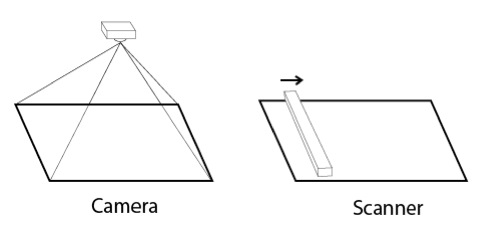
In his latest exhibition 'The Bigger Picture' David Hockney further explores the relationship between the observer and the world. In one experiment, he constructed a rig of 9 video cameras arranged in a grid to capture 9 pictures simultaneously. The theory of perspective which has dominated our world view since the Renaissance is based on projecting the real (3D) world onto the (1D) viewpoint of an observer.
Hockney changes this by replacing this single viewpoint with multiple points of view.
Picasso pioneered the representation of multiple points of view in one plane when he invented Cubism. Hockney has taken this a step further in his more scientific approach. Of course, the resulting picture is fragmented into a number of frames depending on the number of cameras used and Hockney clearly enjoys this fragmentation of the picture surface which he also explores in his multiple canvasses. The camera has reinforced our prejudice that a single point of view represents reality.
The seamless projection of the 'real world' onto a plane would require a scanner rather than a camera.
The scanner captures a more accurate reproduction of a flat document than a camera, and scanning is closer to the mechanism by which our eyes and brains construct our internal model of the world.

So Hockney shifts the perspective from the subjective single viewpoint of the observer to an objective view-plane. 

Some observations ...
  • How does this change our understanding of Einstein's 'observer' fundamental to relativity theory?
  • We use the metaphor 'point of view' to represent a personal perspective. Could we usefully expand it to 'plane of view'?
  • The 'plane-of-view' is simply a way to project the 'real' 3D world onto a 2D plane, it is a better approximation than a point-of-view projection but a truer representation would require holographic 3D and the introduction of the time dimension - in other words an exact simulation of 'reality'. 


Friday, 24 February 2012

Wednesday, 8 February 2012

What is the universe made of? (Part 2)

Perhaps we should put this question differently:
What are the components of the narrative that we call 'reality'?
1) energy/matter
2) space/time
3) a community of observers
4) language/mathematics

If any of these are missing, it won't work.