Sunday, 5 August 2012

The Brick


In the 1950s an avant-garde artist makes his film ‘The Brick’. To make the film, he sets up a brick in artificial light and, with the camera on a static tripod, films it for one hour.
The film is rediscovered and shown in an art cinema. It causes a sensation and runs for a week. The projectionist is bored and sometimes runs the film backwards. Then he makes a still slide of the first frame and shows it for an hour.

----------

Suppose we take a snapshot of the universe in State A, then another in State B. If A and B are indistinguishable then nothing has happened (or time has not passed – which amounts to same thing).
There are many objections to this thought experiment – eg:
1.   Where is the camera which takes the snapshot? Is it ‘outside the universe’?
2.   If time does not pass between State A and State B, how can we take the second snapshot?

Tuesday, 15 May 2012

Rediscovered writing 1

One apparently fine morning, the axis tilted just a minute of arc.
The centre shifted just a micron or two.
And looking up, I noticed that the sky did not quite meet the horizon.
And when I went round to see her (turning corners just a fraction before I came to them,
And I think my feet were dragging a little through the pavement surface)
She looked slightly to one side of my eyes and said "Oh it's you".

Tuesday, 13 March 2012

A rant about thermostats

In my encounters with people on this planet, I have met a surprising number who do not understand how to use the simple thermostat. Consequently many public and private buildings are overheated, causing a massive waste of energy, discomfort and unhealthy conditions.
Let's get it clear - a thermostat is a clever and simple device for maintaining a desired temperature, it does not dial up heat more or less quickly.
Let's say your thermostat has a dial numbered from 1 to 10. You feel cold, so you think 'I will get warm quickly and turn the dial right up to 10.' But then the thermostat will allow the room to overheat, when you finally notice that it is too hot, you turn the thermostat down again - perhaps to number 5 where you know it is about right. Or, worse still, you open the windows to cool the room off - and start the whole process again.
But the thermostat is your friend - just turn it to number 5 and then LEAVE IT ALONE.

Thursday, 8 March 2012

Evolution and inspiration

The structures and processes of life on Earth revealed through science show an amazing complexity and coherence. This revelation happens long after evolution has worked its magic filter.
Sometimes a good art critic can reveal an artist's unknown 'intention' performed in an act of pure inspiration.

Wednesday, 29 February 2012

Hockney's Point of View

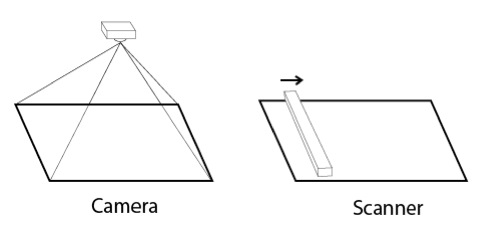
In his latest exhibition 'The Bigger Picture' David Hockney further explores the relationship between the observer and the world. In one experiment, he constructed a rig of 9 video cameras arranged in a grid to capture 9 pictures simultaneously. The theory of perspective which has dominated our world view since the Renaissance is based on projecting the real (3D) world onto the (1D) viewpoint of an observer.
Hockney changes this by replacing this single viewpoint with multiple points of view.
Picasso pioneered the representation of multiple points of view in one plane when he invented Cubism. Hockney has taken this a step further in his more scientific approach. Of course, the resulting picture is fragmented into a number of frames depending on the number of cameras used and Hockney clearly enjoys this fragmentation of the picture surface which he also explores in his multiple canvasses. The camera has reinforced our prejudice that a single point of view represents reality.
The seamless projection of the 'real world' onto a plane would require a scanner rather than a camera.
The scanner captures a more accurate reproduction of a flat document than a camera, and scanning is closer to the mechanism by which our eyes and brains construct our internal model of the world.

So Hockney shifts the perspective from the subjective single viewpoint of the observer to an objective view-plane. 

Some observations ...
  • How does this change our understanding of Einstein's 'observer' fundamental to relativity theory?
  • We use the metaphor 'point of view' to represent a personal perspective. Could we usefully expand it to 'plane of view'?
  • The 'plane-of-view' is simply a way to project the 'real' 3D world onto a 2D plane, it is a better approximation than a point-of-view projection but a truer representation would require holographic 3D and the introduction of the time dimension - in other words an exact simulation of 'reality'. 


Friday, 24 February 2012

Thursday, 16 February 2012

Rewards for success. Punishment for failure.

In banking, rewards are awarded for successful risk-taking. The very nature of risk is that the outcome is open to chance. If we reward success, we are rewarding good luck, not good judgement.
Every day, careless drivers avoid accidents by a stroke of luck. Other drivers (perhaps less careless, but unlucky) cause somebody's death and face imprisonment.
Is this fair?